
Iron Phosphate Coating
Iron phosphating is the most preferred conversion coating method for indoor equipments due to its advantage of low first investment cost and unit prices of the chemicals. Iron phosphate coating chemicals are easy to use products that can be used by wiping, spraying or dipping for the metal surfaces do not require high corrosion resistance.
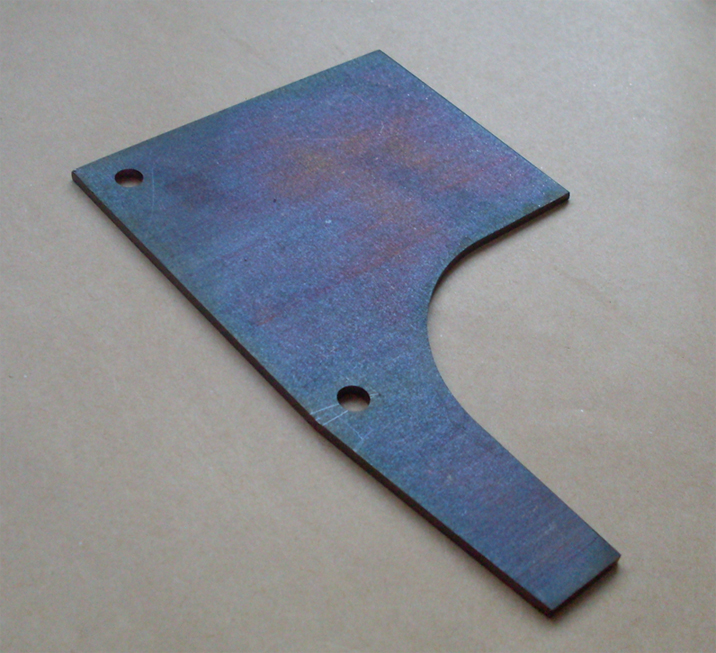
Iron phosphate coating ranges in color light yellow to blue-red. Coating weight is generally between 0.2 - 1.0 gr/m2. Concentration of the coating solution varies in the range of %1 – 10 and operating temperature is between room temperature – 65 °C. Optimum pH value of phosphating solution is 4 to 6. Below pH 4 dusty coating may occur and above pH 6 coating may be loose and unsatisfactory.
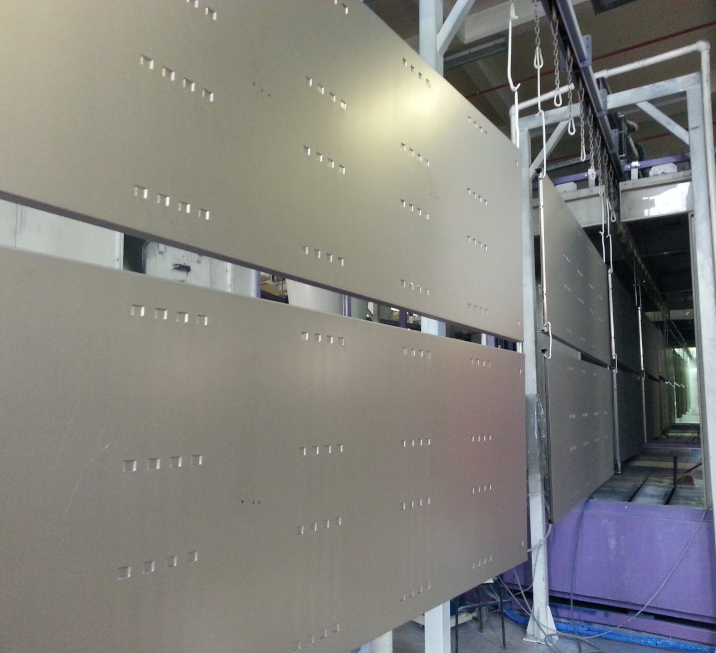
Hence iron phosphate coating is not a thick coating relatively, passivation and drying stages should be operated carefully. When outbreak of oxidation (rust) is observed after the treatment, this indicates insufficient coating on the metal surface. Iron phosphate coated but unpainted metal workpieces do not have improved corrosion protection, that’s why it is an advantage to paint the phosphated surface immediately after phosphating.
Iron phosphating increases paint adherence and impact resistance along with improved flexibility. Treated metal surface has the ability to stop progress of oxidation underneath the paint when damaged by an external impact.
However iron phosphating suitable for ferrous metals, by the advantage of surfactant content, it can also be employed in cleaning and etching of aluminium or galvanized metals.
Iron Phosphate Conversion Coating By Applications
Wipe Application Iron Phosphating
Wipe application iron phosphating is the simplest method of phosphating. Easy application and its working ability at lower temperatures make wipe application iron phosphating very feasible. Metal parts are wiped, brushed or cleaned with a sponge. It is preferred for such large metal pieces which do not fit into phosphating baths (phosphate coating tank) and also preferred when working area is not enough to set up a continuous line or immersion line of phosphating.
Iron phosphate coating by wiping is employed at between room temperature – 50 °C. It is observed that working at higher temperatures is advantageous. Concentration of the coating solution is between %8 – 10. With this high concentration of chemicals, grease particles on the metal surface dissolves by wiping with sponge or by a proper type of brush.
It is recommended to Prepare a new working solution instead of adding phosphating chemicals over used solution when active content of the solution is reduced.
Here is video of treating metal workpieces with iron phosphate coating chemical:
Dip Application Iron Phosphating
Having low investment cost and simple operating, dip application iron phosphate coating process is the traditional process mostly preferred.
Metal surface has to be cleaned from grease and possible oxidations prior to phosphating. If there is too much rust in the surface, acid pickling must be employed. Metal workpieces coming out of acid pickling bath must be rinsed with water properly to prevent drifting of acidity. Balance of the phosphatizing bath can be broken up if excessive driftings come from pickling bath.
Phosphate coated workpieces are treated with passivation solution and then are brought to drying stage at maximum degree of 110 °C. Over 110 °C, phosphate film begins to deform.
Important parameters are: Temperature, pH, concentration, application time.
Immersion type iron phosphate conversion coating bath must work around 50–55 °C with application time between 5–10 minutes. Concentration varies % 1 to % 5. In the course of time, pH and Total Acid point of the coating composition has to be controlled. Generally pH is tended to increase. To prevent high pH, pH reducer must be added to phosphating bath until reaching to optimum level.
Concentration of the coating bath is controlled by additional chemicals. Eventhough all phosphatizing products have characteristic Total Acid values, generally it must not stay below pH 6.
Spray Application Iron Phosphating
Spray iron phosphate coating is the newest and most advanced method. Spray pressure plays effective role on the surface reaction. Although first investment of this process is costly, it has various advantages; improved quality, high speed of production and low chemical consumption.
Two types of degreasing can be employed. One is alkaline degreasing prior to phosphating. Other one is the combination of neutral degreasing chemical, and phosphating chemical in the same working bath.
Operating temperature is between 55–65 °C with 2–5 minutes of application time. Spray pressure must be in the range of 1.5-2.0 bar. With low pressure insufficient coating, at high temperatures dusty coating can be seen on the surface. pH of the coating solution must be in the range of 4–6. Optimum pH value is obtained by pH reducer or by main component phosphating product. Concentration of the iron phosphate conversion coating solution is between 1.5–3.0%. Phosphated metal workpieces are rinsed and then brought to passivation treatment. At the next stage, drying temperatures must not pass over 110 °C. At excessive temperatures water particles which are located between phosphate crystals evaporate, thus quality of the coating reduces, corrosion protection cannot be effective any longer.