Manganese Phosphate Coating
Manganese phosphating as a wear protection measure is well-known and widely used in the auto industry. Gearwheels in the gearbox, crown and pinion gears in the differential, cam-shafts, valves and valve-steams as well as pistons in larger diesel engines are frequently treated in this way. It is extensively employed to improve the sliding properties of engine, gear, and power transmission systems. It has the highest hardness and superior corrosion and wear resistances of general phosphate coatings. In other industries, the process is used to treat components in refrigerator compressors or oil pumps and their associated hydraulic rams for vehicle assembly plants.
The use of manganese phosphate coatings for improved corrosion resistance can be found in virtually all branches of the metal working-industry. Typical examples mentioned here include motor vehicle components in brake and clutch assemblies, engine components, leaf or coil springs, drill bits, screws, nuts and bolts, washers, anti-vibration washers, tools, magnet cores, casting interiors and many other small items.
Process Line
Whether a post-treatment such as oil application is to be used or not, are invariably applied by the immersion method. The processing sequence can be summarized as follows:
- Degreasing and Cleaning
- Water Rinse
- Pickling In Mineral Acid (Where Necessary)
- Water rinse (Only After Pickling)
- Activation
- Manganese Phosphating
- Water Rinse
- Final Oven Drying (Optional)
- Lubricating With Special Oils or Emulsions
At the beginning of the phosphating line, the parts must be cleaned first. For this purpose, acidic, neutral or alkaline degreasing chemicals can be used. For an effective cleaning, alkaline type degreasing products are generally preferred and these alkaline chemicals are used at a concentration of 1-5% and at 65-95 ºC. Processing time varies between 5-15 minutes.
If there is a layer of rust and oxide on the surface of the parts to be treated, these layers are cleaned by pickling after degreasing. If the rusty areas are not cleaned, phosphate coating will not form on these areas.
There should be more than one water rinse bath between degreasing and phosphating so that the alkaline or acidic content is not carried into the phosphating bath. Changing the rinsing baths completely at short intervals or renewing them continuously with flooding ensures that the acidic balance of the manganese phosphate bath is maintained and that it works stably.
After cleaning with alkalis and acids, the parts are immersed in the conditioning bath, which is usually called "activation", to ensure the formation of homogeneous and fine crystalline phosphate layers. Activation baths consist of fine-grained manganese phosphate compound. Thanks to the effective activation chemicals developed in recent years, the problems caused by thick crystalline coatings have been prevented. Although manganese phosphating provides a greater coating thickness and larger crystalline coating than zinc phosphating, an extremely high corrosion resistance is achieved by obtaining a fine crystalline coating by the use of the activation treatment.
Manganese phosphating is mainly by immersion. Concentrated chemical products are generally used at a concentration of 15-20% by weight to prepare manganese phosphate coating baths. As the coating is made, necessary product additions are made according to the bath analysis. Total acid, free acid and dissolved iron values are measured and checked to see if they are in the appropriate range. The phosphate sludge formed in the bath with the coating should be cleaned at regular intervals. Treatment times range from 5-20 minutes, the optimum time depending on the surface condition. The bath operating temperature is around 95 °C and only in special cases can satisfactory coatings be formed at temperatures between 70-80 °C.
The phosphated components, after drying, are immersed in the oil or lubricant baths for 0.5-2 minutes, allowed to drain. The thickness of the resulting oil film depends on the oil used and its concentration.
Operating Parameters For Some Thick Phosphating Process
| Phosphating System | Accelerator | Concentration (total acid points) | Temperature (°C) | Treatment Time (min.) | Coating Weight (g/m2) |
|---|---|---|---|---|---|
| Zn-Ph | None | 20-50 | 90-98 | 30-60 | 20-45 |
| Zn-Ph | Nitrate | 50-80 | 70-98 | 5-15 | 10-35 |
| Mn-Ph | None | 20-50 | 90-98 | 30-60 | 20-45 |
| Mn-Ph | Nitrate | 30-60 | 90-98 | 5-15 | 8-30 |
The coating weight and crystal size of the manganese phosphate coatings are influenced to an even greater extent than in zinc phosphating by the mechanical, thermal, and chemical pretreatment of the workpiece surface prior to phosphating. For example, cleaning in alkaline aqueous cleaning agents or pickling in acids produces coatings with a much coarser texture. Even after such treatments, however, fine crystalline phosphate coatings are still obtainable if the workpieces are prerinsed in an activation rinse prior to the phosphating.
Coating Apperance and Color
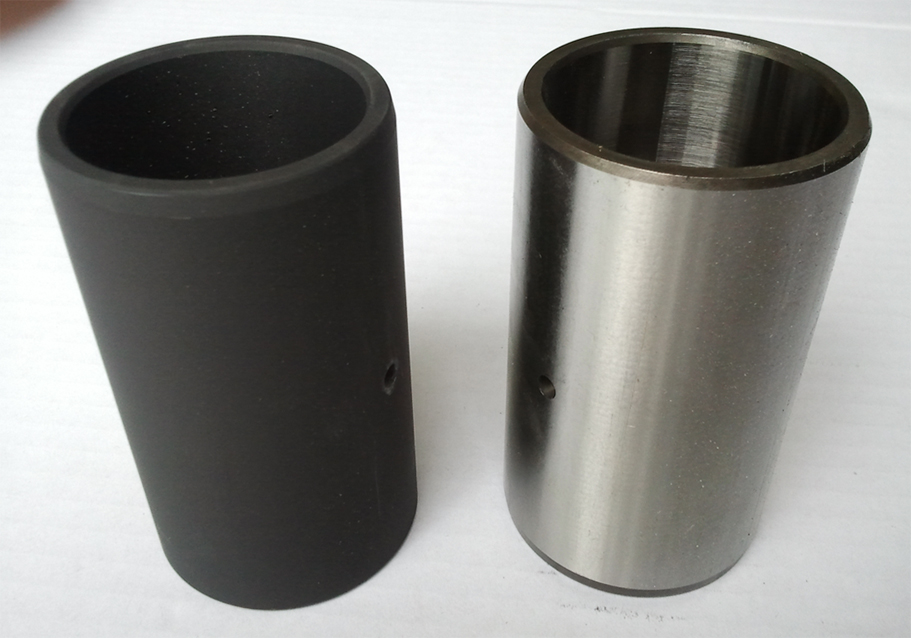
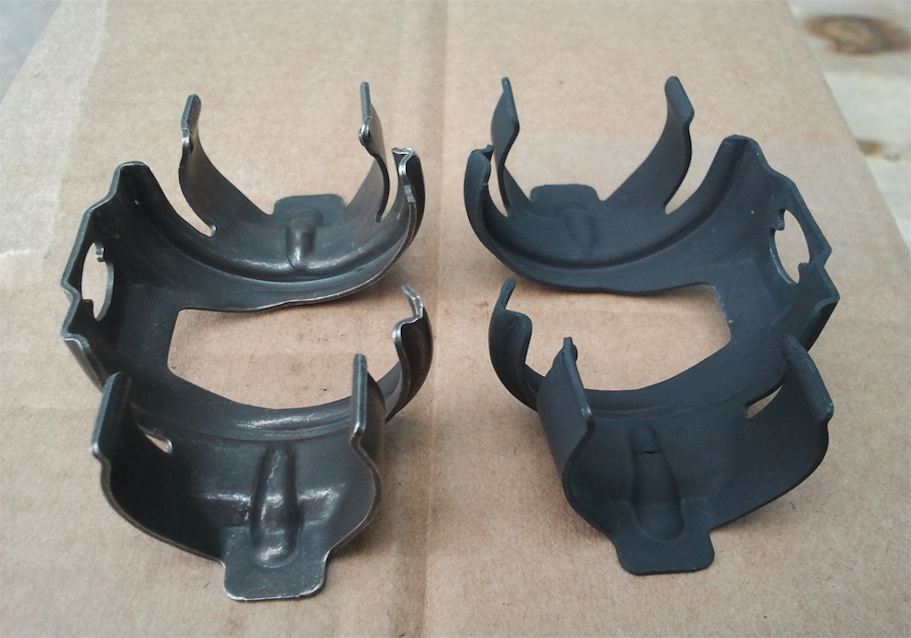
The image formed after manganese phosphating is darker gray and close to black compared to zinc phosphate coatings. With this; Variables such as the type of metal, the surface color before coating, the conditions of use for activation, the type of oil to be used as the last treatment also affect the final color of the coating to a large extent.
The surface color of the part to be treated directly affects the color to be obtained after coating. For instance; The appearance of a light gray machined part after manganese phosphating may be in the light gray - dark gray range, while the appearance of a darker cast part after coating may be in a much darker tone.
Application of lubricant makes the color of the coating darker and brighter. Therefore, oils with different properties provide different degrees of darkness. Water-based boron oils, mineral-based oils, solvent-containing oils, oils with high corrosion resistance additives and oils with high friction resistance can be given as examples of oil types used in the sector.